Medical Tech Outlook Weekly Brief
Be first to read the latest tech news, Industry Leader's Insights, and CIO interviews of medium and large enterprises exclusively from Medical Tech Outlook
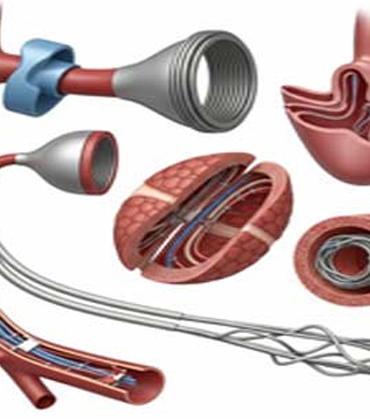
Just like fingerprints, no two aortas are the same. Yet, aortic repair is often approached as a standardised process when the anatomy itself is anything but. With a commitment to aortic care, Terumo Aortic ensures that clinicians and patients are offered the broadest range of solutions, addressing all anatomies with a view to providing total management of aortic disease. Every device is designed and manufactured with a singular purpose—to give surgeons better options for the full span of thoracic and abdominal aortic repair. “Our sole focus on aortic care gives us clarity,” says Erik Pomp, CEO. “We’re not distracted by competing priorities; we’re driven by one—delivering smarter, more personalised solutions for every segment of the aorta. It’s embedded in how we think, build and support the clinicians we serve.” Through advanced knitting and weaving techniques, the grafts offer the trifecta surgeons depend on—strength to withstand physiological forces, flexibility to adapt to anatomy and control in the most demanding procedures. Gelsoft Plus and Gelweave, for instance, have become trusted mainstays in open surgeries, particularly when precision is non-negotiable. When the clinical pathway demands a less invasive approach, the company’s endovascular portfolio meets the moment. Treo and Relay reflect this versatility, offering surgeons the choice of fully customised designs tailored to anatomical and pathological complexity. Bespoke engineering allows the solutions to mirror the patient’s anatomy, giving clinicians the confidence to treat the most complex cases. But not all cases follow predictable paths. For patients who fall between open and endovascular routes, Terumo Aortic’s hybrid platforms— Thoraflex Hybrid, ThoracoFlo, and RapidLink—step in to close the gap. These technologies treat the most vulnerable and high risk patients by unlocking new options for anatomies that were once untreatable, making durable, less invasive interventions possible where it wasn’t before. The focus on recovery is also a key part of the design. Each device facilitates streamlined procedures, which translates to reduced ICU time, freed-up clinical resources and smoother workflows for care teams. For patients, this means a faster recovery, fewer complications and a better overall experience. Surgeons place their trust in Terumo Aortic because their solutions greatly minimise the margin for error.
PhosPrint, a visionary Greek startup, is reshaping the future of regenerative medicine with its pioneering in vivo laser bioprinting technology. Imagine the potential—no longer are we confined to growing tissues in sterile bioreactors. PhosPrint has developed a method that prints tissue inside the body, harnessing natural biological processes to stimulate tissue growth and healing in real time. At the core of this revolution is PhosPrint’s proprietary Dual Beam I (PhosDB.I) bioprinter, an engineering marvel that uses laser pulses to deposit living cells suspended in bio-ink, building complex 3D structures with unmatched 10-micron precision. Whether the surface is flat or curved, the bioprinter places cells exactly where they need to be, layer by layer, forming delicate tissue scaffolds essential for regenerating functional tissues. The printer’s unique technology uses a combination of human primary cells with hydrogels such as alginate, matrigel or basement membrane extracts (BME)—matrices mimicking the extracellular environment. This combination enables cells to attach and grow as they would inside the body, enhancing tissue regeneration by closely simulating natural processes. The magic begins with the preparation of bio-inks—blends of living cells and biocompatible materials/ hydrogels—ejected in tiny droplets guided by the printer’s focused laser pulses. The printer’s ability to control droplet size and placement ensures remarkable accuracy in constructing biological patterns. Ranging from 10 to 300 micrometres in droplet size and printed in volumes from picolitres to nanolitres, the PhosDB.I ensure a spatial accuracy of ±10 micrometres, which is vital for creating high-resolution tissues. The result? A highly viable post-printing environment ensures cells retain their functionality and longevity as they integrate into the tissue. The PhosDB.I bioprinter is designed with flexibility and adaptability in mind. Its dual-wavelength module allows for real-time adjustments during bio-ink processing, significantly expanding the types of tissues that can be printed.


For small and micro-businesses, regulatory compliance isn’t just a requirement—it’s a gateway to market credibility. Yet, without the right support, this can be an intimidatingly complex pathway. Advena’s deep regulatory expertise opens doors, transforming compliance into a strategic asset that accelerates clients’ journeys to market. “Our goal is to empower clients by simplifying the regulatory process, driving innovation rather than becoming an obstacle,” explains Kirsty Ostle, Managing Director. Advena’s robust suite of services includes navigating complex UK and EU regulatory and quality frameworks, to fulfilling essential roles such as the UK Responsible Person, a role required by the UK Medical Device Regulations for non-UK manufacturers and Person Responsible for Regulatory Compliance (PRRC) required by the EU Medical Device and IVD Regulations. This way, Advena becomes a committed partner at every stage of the compliance journey. Not only does it ensure compliance, but it also strengthens clients’ operations from the ground up. Through audits aligned with ISO 13485 and ISO 9001, Advena introduces best practices that enhance operational resilience. Its seasoned auditors conduct thorough reviews, assessing both in-house and supplier processes, evaluating quality management systems and delivering actionable recommendations to elevate client efficiency and reliability. Education is woven into everything Advena does. Beyond traditional consulting, it empowers clients through tailored training, auditing and supplier assessments that build both confidence and knowledge. Bespoke training sessions—available virtually or onsite—equip teams with practical skills, ensuring they are well-prepared to meet regulatory demands independently and sustainably. For businesses looking to establish themselves in complex markets, Advena is a versatile resource, turning compliance into a true competitive edge.
Drug Delivery Solutions

Antoni Chan, Clinical Lead in Rheumatology, Royal Berkshire NHS Foundation Trust
Cardiovascular Devices

Mark Hornby, Medical Engineering Manager, Northern Care Alliance NHS Foundation Trust
Cancer Care

Ryan Kerstein, Associate Medical Director for Innovation and Research, Buckinghamshire Healthcare NHS Trust
Cardiovascular Devices

Joan Vinyets Rejón, PhD., Head of Patient Experience, The Hospital Sant de Déu
Orthopedic

Lars Blond, Senior Orthopedic Surgeon, Aleris Hospitals

Cardiovascular Devices
Kolitha Basnayake, Deputy Medical Director, University Hospitals Birmingham NHS Foundation Trust

Endoscopy
Dr. Karl Marlowe, Chief Medical Officer, Oxford Health NHS Foundation Trust
Aortic medical device innovation in Europe is enhancing minimally invasive care and AI-driven diagnostics while supporting personalised implants. These advancements improve patient outcomes and streamline healthcare procedures.
Evolving European medical device regulations are driving increased demand for specialised consulting to ensure product approval.
Designing Smarter Systems for Scalable, Patient-Centred Innovation
The same precision-first momentum is driving change in regenerative medicine. Therapies are evolving beyond experimental to become ready-to-use platforms such as biocompatible, scalable and optimised for clinical use. The regulatory consulting space plays a larger role in shaping Europe’s medtech future. Helping device manufacturers interpret changing MDR and IVDR expectations, build strong clinical evidence strategies and stay aligned with compliance from the earliest stages of development ensures a seamless regulatory pathway.
These changes reflect a broader trend. The medtech Europe market is projected to reach $213.18 billion by 2030, growing at a CAGR of 4.35 percent.
The magazine features a thought-provoking article from Ryan Kerstein, Associate Medical Director for Innovation and Research at Buckinghamshire Healthcare NHS Trust. In it, Kerstein discusses the importance of grassroots innovation within the UK’s NHS and emphasises that meaningful healthcare innovation must start with clearly identified needs, not technology, for its own sake. Additionally, an article by Dr Karl Marlowe, Chief Medical Officer at Oxford Health NHS Foundation Trust, explores how Medtech is actively redefining the delivery of mental health services that support independent living.
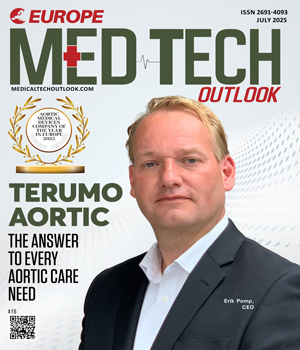
The publication spotlights Terumo Aortic as the cover feature for Aortic Medical Devices Company of the Year, recognising its expertise in developing grafts and stents that support the entire spectrum of thoracic and abdominal aortic repair. These devices empower surgeons with more tailored, effective options and advanced patient outcomes worldwide.
This edition features the Aortic Medical Devices Company of the Year in Europe 2025, Regenerative Medicine Solutions Provider in Europe 2025 and Medical Devices Regulatory Consulting, we hope you find the right partner to meet your organisation’s needs.