Medical Tech Outlook Weekly Brief
Be first to read the latest tech news, Industry Leader's Insights, and CIO interviews of medium and large enterprises exclusively from Medical Tech Outlook
What clinical challenges is EziVein designed to address in practice? EziVein is a medical device designed to improve vascular access by increasing first‐attempt cannulation success in high‐pressure clinical settings. It focuses on simplicity, speed and usability in real‐world conditions. IV cannulation and blood draws are among the most common procedures performed across hospitals and care settings. But in environments already facing staff shortages and time pressure, securing reliable venous access often presents practical challenges at the point of care. Clinicians frequently struggle to identify the right vein on the first attempt, as multiple patient and situational factors complicate what should be a routine step in care delivery. An estimated 35 per cent of patients have difficult vein access (DVA), a condition in which veins are hard to locate or cannulate due to factors like dehydration, anxiety, fragile veins, age, obesity or skin tone. Clinical protocols often limit clinicians to the first and second attempts before escalation, increasing pressure at the point of care. EziVein was developed to address these challenges head-on, bringing greater precision and consistency to vein detection. A clinically validated vein detection solution, EziVein is a low-cost, disposable, hands-free device that provides visual assistance during blood draws and IV cannulation. Designed for precision and ease of use, the device is leveraged across emergency departments, paediatric units, military ambulances, general practitioner settings and home infusion therapy. “Vascular Access is a small moment in care but can have a huge impact on workflow and patient outcomes,” says Marie Casey, CEO.
One-size-fits-all implants have defined the orthopaedic industry for years. Dedienne Santé is rewriting that story by introducing a new era of precision powered by collaboration. The French company has earned a reputation as a trusted partner for surgeons through innovations that fit seamlessly into established surgical techniques. Its comprehensive approach, covering in-house design, manufacturing, instrumentation and digital planning tools, is developed with active participation from the surgeon community. Through this collaboration, the company’s engineers analysed more than 200 CT scans of male and female patients to ensure anatomical accuracy. This research led to the development of a shortened femoral stem, designed for precise metaphyseal fixation and enhanced stability. Unlike traditional long stems, it fits more closely within the proximal femur, reducing the margin for error and supporting stronger long-term outcomes. “Our values are fidelity, reliability, and service. We don’t chase short-term marketing trends but focus on building long-term trust with surgeons,” says Ludovic Toledo, president. Dedienne Santé’s most distinctive advancement lies in its acetabular innovation. The company is the only implant maker worldwide to offer a hemispherical dual mobility acetabular cup, building on a concept first pioneered in France in the 1970s. The design reduces the risk of dislocation tenfold, addressing the leading cause of failure in total hip arthroplasty. The cup can even be implanted using familiar methods, allowing for efficient adoption without the challenges of a steep learning curve. Complementing its geometric advances, Dedienne Santé has created a patented no-touch implantation system that enables surgeons to insert the cup without direct contact. By minimizing handling during surgery, the design lowers the risk of infection while preserving workflow efficiency. While implant design drives outcomes, surgical planning sets the stage. Dedienne Santé has invested heavily in moving beyond 2D planning like X-rays, which can be imprecise due to patient positioning and other variables. Its 3D planning tools, powered by CT data, allow surgeons to make preoperative decisions about implant design and size with high accuracy. This approach reduces the number of implants that need to be stocked in the operating room while giving surgeons greater confidence going into surgery. The approach balances clinical rigor with operational efficiency, highlighting the company’s commitment to solving real-world challenges in orthopaedic practice.


Oria Dental is born, the innovative, painless therapy that simplifies dental care: the new ORIA DENTAL patent with the University of Pavia. A new patent opens up unprecedented prospects for dental prevention and care. Oria Dental, a startup focused on researching noninvasive solutions for oral health, has developed the ORIA BITE device in collaboration with the University of Pavia, a technology destined to change the way dentists and patients approach daily dental care. The system, based on a calibrated pressure treatment principle and the use of ozonated gel, allows for deep treatment of the entire dental arch, even in the most difficult-to-reach areas, painlessly and without invasive procedures. This combination improves the health of dental and gum tissue, reducing inflammation and promoting natural regeneration. “The goal is to make dental care a simple and painless practice of ongoing prevention, both in the clinic and for home care, not a procedure to be feared,” explains Massimo Basso, founder and president of Oria Dental. “With ORIA BITE, we wanted to combine the precision of university research with a concrete technology that can truly become part of dental practices and people’s daily lives.” The project is the result of a long collaboration between Oria Dental and researchers at the University of Pavia, who worked side by side to develop a scientifically validated and clinically safe system. Laboratory tests and clinical protocols have confirmed the safety and efficacy of the device. The University of Pavia and its partners specializing in dental software played a key role in defining the pressure parameters and gel flow distribution, ensuring a reliable and replicable technology. “The patent is just the starting point,” adds Basso. “What really matters is the ability to translate innovation into daily practice, offering dentists more effective tools and patients a completely different experience: less fear, more comfort, more prevention.”
Medical Imaging Systems

David D. Tran, Chief of Neuro-Oncology and Co-Director of the USC Brain Tumor Center, Keck Medicine of USC
Endoscopy

Vratislava Kovarova, Senior Director Population Health and Medicine, Fresenius Medical Care
Patient Monitoring Devices

Pat Jackson, Director, Patient Experience & Advocacy, Huntsville Hospital
Medical Imaging Systems
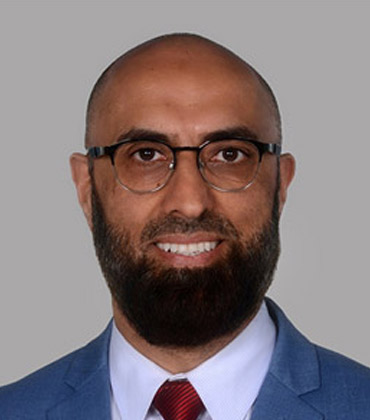
Abe Nader, Assistant Vice President, Inova Health System
Medical Device Design and Development

Paul Dimitri, Bsc, MBChB, FRCPCH, PhD, Director of Research and Innovation, Sheffield Children’s NHS Foundation Trust

Cardiovascular Devices
Kolitha Basnayake, Deputy Medical Director, University Hospitals Birmingham NHS Foundation Trust

MedTech Year End
Sophie Morales, Head of Service, CEA-Leti
Spine problems across Europe cause pain, mobility loss, and impact quality of life through degeneration, nerve compression, and structural damage.
Engineering Better Outcomes in Modern Healthcare
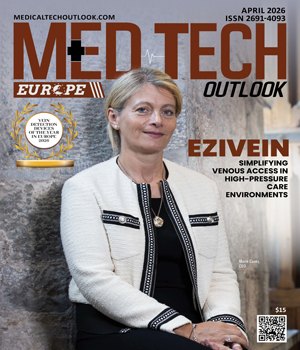
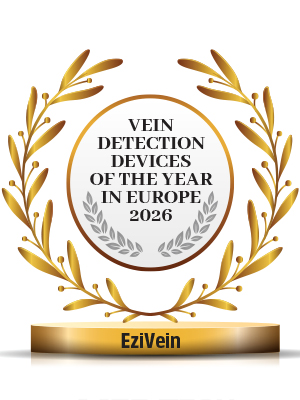
The cover story of this edition features EziVein, recognized as the Vein Detection Devices of the Year in Europe 2026 for its contribution to improving vascular access in demanding clinical environments. Intravenous cannulation and blood draws are among the most frequently performed procedures in healthcare, yet difficult vein access affects an estimated 35 percent of patients, often leading to repeated attempts and treatment delays. EziVein addresses this challenge through a clinically validated, low-cost, disposable, hands-free device that enhances vein visualization using transillumination and polychromatic light technology.
By improving contrast beneath the skin, the device enables clinicians to identify suitable veins more effectively, increasing the likelihood of first-attempt success. Designed to integrate seamlessly into existing clinical workflows, EziVein requires no specialized training and can be deployed across emergency departments, paediatric units, ambulances and community care settings, helping clinicians initiate treatment more efficiently in high-pressure situations.
This edition also features perspectives from healthcare leaders shaping the future of medical technology. David D. Tran, Chief of Neuro-Oncology and Co-Director of the USC Brain Tumor Center at Keck Medicine of USC, discusses how precision medicine and collaborative clinical trials are advancing immunotherapy approaches for brain tumors. Meanwhile, Paul Dimitri, Director of Research and Innovation at Sheffield Children’s NHS Foundation Trust, highlights the role of evidence-driven innovation ecosystems that connect clinicians, researchers, industry partners and young patients to accelerate pediatric health technology development.
Together, these perspectives demonstrate how focused innovation and collaborative leadership are advancing medical technology across Europe. We invite readers to explore the insights in this issue and examine the technologies shaping the future of healthcare delivery.