Medical Tech Outlook Weekly Brief
Be first to read the latest tech news, Industry Leader's Insights, and CIO interviews of medium and large enterprises exclusively from Medical Tech Outlook
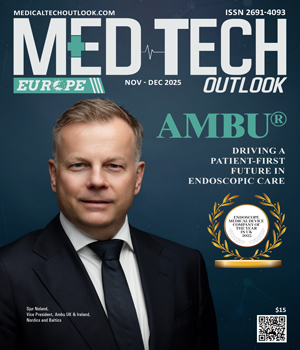
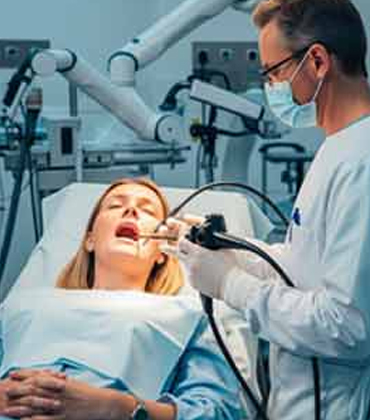
Modern healthcare often adds layers of complexity in the name of safety. Reusable endoscopes are a case in point. They require more than an hour of reprocessing, which ties up staff, delays procedures and costs hospitals hundreds of pounds per cycle. Even with careful checks, contamination and breakdowns are possible. It should be no surprise that regulators and health systems across Europe are rethinking the model. NHS England now links infection prevention directly to operational efficiency and is investing heavily in diagnostic capacity closer to communities. Ongoing trials, set to conclude in 2025, will weigh the costs, safety and environmental impact. Yet hospital leaders already see the writing on the wall; waiting lists, patient safety and reputational risk demand faster solutions. Ambu anticipated this shift long before it reached the policy agenda. More than a decade ago, it recognised that simplicity would drive healthcare forward. As the pioneer of single-use endoscopy, Ambu has built a portfolio of sterile, ready-to-use devices that bypass reprocessing, eliminate repair costs and deliver ‘like-new’ performance every time. Flagship devices such as the Ambu® aScope™ 4 Cysto and Ambu® aScope™ 5 Broncho HD show that safety and efficiency can combine when tools are built for both. “Our philosophy is that innovation must solve real-world problems,” says Sjur Noland, Vice President, Ambu UK & Ireland, Nordics & Baltics. “For hospitals, that means freeing staff from bottlenecks, cutting hidden costs and giving patients care with the highest standards of safety and clarity. That is the future single-use technology delivers.” The New Scope of Hospital Efficiency Ambu’s shelf-ready design speaks the practical language of hospitals. Each variant scales services quickly, keeps budgets predictable and supports sustainability targets without compromise, whether in community hubs or weekend ‘super clinics.’ The model reshapes hospital economics by replacing fixed capital outlays with flexible operating costs. Instead of tying budgets to fleets of reusable scopes and reprocessing units, hospitals pay per procedure. Costs are aligned with demand. Unused assets no longer sit depreciating, and hidden expenses—detergents, utilities, PPE and specialist staff— are removed from the balance sheet. Resources can be redirected into patient care. That financial clarity is matched by environmental responsibility. In 2023, Ambu introduced the Ambu ® aScope™ Gastro Large, the world’s first endoscope to incorporate bioplastics in its handle, cutting the carbon footprint of its raw plastic materials by around 70 percent. By the end of 2024, all endoscope handles were manufactured using bioplastics. The Ambu® Recircle Program builds on this, collecting used endoscopes for recycling and reintegration into non-material streams. Pilot programmes in Germany and the UK have proven that the model works. The Ambu ® Recircle is already expanding in the U.S. and France, operating more than 25 sites across four countries, with many more in the pipeline for 2026.
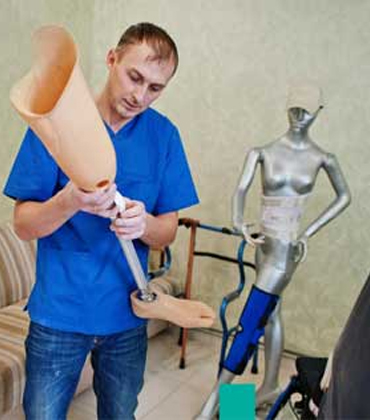
One-size-fits-all implants have defined the orthopaedic industry for years. Dedienne Santé is rewriting that story by introducing a new era of precision powered by collaboration. The French company has earned a reputation as a trusted partner for surgeons through innovations that fit seamlessly into established surgical techniques. Its comprehensive approach, covering in-house design, manufacturing, instrumentation and digital planning tools, is developed with active participation from the surgeon community. Through this collaboration, the company’s engineers analysed more than 200 CT scans of male and female patients to ensure anatomical accuracy. This research led to the development of a shortened femoral stem, designed for precise metaphyseal fixation and enhanced stability. Unlike traditional long stems, it fits more closely within the proximal femur, reducing the margin for error and supporting stronger long-term outcomes. “Our values are fidelity, reliability, and service. We don’t chase short-term marketing trends but focus on building long-term trust with surgeons,” says Ludovic Toledo, president. Dedienne Santé’s most distinctive advancement lies in its acetabular innovation. The company is the only implant maker worldwide to offer a hemispherical dual mobility acetabular cup, building on a concept first pioneered in France in the 1970s. The design reduces the risk of dislocation tenfold, addressing the leading cause of failure in total hip arthroplasty. The cup can even be implanted using familiar methods, allowing for efficient adoption without the challenges of a steep learning curve. Complementing its geometric advances, Dedienne Santé has created a patented no-touch implantation system that enables surgeons to insert the cup without direct contact. By minimizing handling during surgery, the design lowers the risk of infection while preserving workflow efficiency. While implant design drives outcomes, surgical planning sets the stage. Dedienne Santé has invested heavily in moving beyond 2D planning like X-rays, which can be imprecise due to patient positioning and other variables. Its 3D planning tools, powered by CT data, allow surgeons to make preoperative decisions about implant design and size with high accuracy. This approach reduces the number of implants that need to be stocked in the operating room while giving surgeons greater confidence going into surgery. The approach balances clinical rigor with operational efficiency, highlighting the company’s commitment to solving real-world challenges in orthopaedic practice.


Oria Dental is born, the innovative, painless therapy that simplifies dental care: the new ORIA DENTAL patent with the University of Pavia. A new patent opens up unprecedented prospects for dental prevention and care. Oria Dental, a startup focused on researching noninvasive solutions for oral health, has developed the ORIA BITE device in collaboration with the University of Pavia, a technology destined to change the way dentists and patients approach daily dental care. The system, based on a calibrated pressure treatment principle and the use of ozonated gel, allows for deep treatment of the entire dental arch, even in the most difficult-to-reach areas, painlessly and without invasive procedures. This combination improves the health of dental and gum tissue, reducing inflammation and promoting natural regeneration. “The goal is to make dental care a simple and painless practice of ongoing prevention, both in the clinic and for home care, not a procedure to be feared,” explains Massimo Basso, founder and president of Oria Dental. “With ORIA BITE, we wanted to combine the precision of university research with a concrete technology that can truly become part of dental practices and people’s daily lives.” The project is the result of a long collaboration between Oria Dental and researchers at the University of Pavia, who worked side by side to develop a scientifically validated and clinically safe system. Laboratory tests and clinical protocols have confirmed the safety and efficacy of the device. The University of Pavia and its partners specializing in dental software played a key role in defining the pressure parameters and gel flow distribution, ensuring a reliable and replicable technology. “The patent is just the starting point,” adds Basso. “What really matters is the ability to translate innovation into daily practice, offering dentists more effective tools and patients a completely different experience: less fear, more comfort, more prevention.”
Endoscopy

Kaisla Lahdensuo, Business Director, Specialist Care, Meliva Sweden, Mehiläinen
Endoscopy

Dr. Karl Marlowe, Chief Medical Officer, Oxford Health NHS Foundation Trust
Cancer Care

Ryan Kerstein, Associate Medical Director for Innovation and Research, Buckinghamshire Healthcare NHS Trust
Endoscopy

Professor Paul Dimitri, Director of Research and Innovation, Sheffield Children’s NHS Foundation Trust
Endoscopy

Vratislava Kovarova, Senior Director Population Health and Medicine, Fresenius Medical Care
Cardio Vascular Devices

Gisella Murguia Norlander, General Dentist, Folktandvården Stockholm AB
Endoscopy
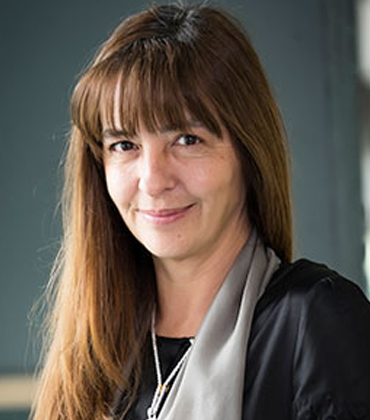
Cristina Mesquita, Director of Clinical Operations Design and Control, Luz Saude
European orthopaedic implant manufacturing advances through precision materials, digital manufacturing, regulatory rigour, and clinical collaboration to meet ageing populations and demand for safer, longer-lasting implants.
The endoscopy industry is evolving with technological advancements, increasing demand, and challenges in regulations and costs affecting healthcare access.
Advancing Care through Insight and Intelligent Design
Dental products have evolved from conventional tools to digital systems that integrate scanning, design and fabrication into a single workflow. Intraoral imaging, CAD and chairside manufacturing are reducing variability in restorative and implant procedures, while providing clinicians with a faster view of underlying oral structures.
Orthopaedic implants are evolving from standard components to precision-engineered solutions that respond to the increasing demand for surgical procedures. Additive manufacturing, improved surface treatments and patient-specific models are strengthening outcomes in joint reconstruction and trauma care.
Endoscope devices are transitioning from traditional optical tools to intelligent platforms that enhance detection and reduce the risk of infection. High-definition visualisation, AI-supported analysis and the adoption of disposable scopes are increasing procedural speed while easing the demands of reprocessing.
The market outlooks reflect this acceleration. Europe’s dental sector is projected to reach $24.20 billion by 2032, growing at about 10.4 percent. Orthopaedic implants are expected to expand to $73.9 billion by 2030, at a rate of roughly 6.8 per cent and the endoscopy segment is forecasted to reach $6.7 billion, close to 9 percent, by 2030.
This edition highlights leaders shaping clinical innovation. Puteri Abdul Haris demonstrates how AI and automation are enhancing the quality of radiotherapy. At the same time, Ryan Kerstein underscores the importance of frontline insight in driving meaningful change across the NHS.
We also spotlight Ambu®, a company redefining endoscopy through single-use innovation. Its ready-to-use devices eliminate reprocessing delays and provide hospitals with predictable efficiency, while advanced imaging, bioplastic designs and a growing recycling network support safer, more sustainable care across clinical settings.
We hope these perspectives provide healthcare leaders, clinicians and decision-makers with a clearer understanding of the technologies reshaping patient care and operational efficiency.