Medical Tech Outlook Weekly Brief
Be first to read the latest tech news, Industry Leader's Insights, and CIO interviews of medium and large enterprises exclusively from Medical Tech Outlook
Capacitive and resistive energy transfer (CRET) has traditionally relied on qualitative interpretation during treatment, with clinicians assessing effectiveness through heat sensation, patient feedback and gradual improvements in movement and recovery. The physiological interaction between transferred energy and tissue response, however, remained insufficiently visible and difficult to objectively measure. For Wintecare , a Swiss medical technology company, that gap represented a central limitation of conventional TECAR rehabilitation. Therapists could observe the external effects of treatment, yet important clinical variables still depended heavily on perception and operator experience. How much energy was actually being absorbed by the tissue? How was it distributed throughout different biological structures? Which responses were primarily thermal, and which reflected deeper physiological stimulation? The questions pushed Wintecare to re-examine TECAR therapy through a more measurable physiological framework. Working alongside European universities and laboratories, it began developing a system designed to bring greater visibility, control and objective treatment variables into energy-based rehabilitation. The result was T~Advanced, a platform capable of monitoring energy transfer in real time. For the first time, therapists can quantify delivered energy, monitor tissue response during treatment and distinguish between thermal and non-thermal physiological effects, while maintaining the flexibility of clinical decision-making throughout rehabilitation. For Simone Luca Binda, founding partner, the objective was never to reduce rehabilitation to technology alone. The goal was to strengthen therapist expertise through measurable evidence while preserving the manual skill, experience and clinical judgment that remain central to physical therapy.
For many years, manual therapy techniques have been the cornerstone of treatments for musculoskeletal issues, ranging from joint pain to scar tissue rehabilitation. However, the challenge of reaching deeper tissue layers that cannot be addressed by hands-on methods has always remained. It was this gap in therapeutic outcomes that Stefan Deny, a medical practitioner, inventor, and creator of the innovative Pneumatic Pulsation Therapy (PPT), noticed early in his career. Deny’s clinical observations revealed that traditional manual techniques often fell short of penetrating the deeper layers of tissue that are crucial for long-term healing and pain relief. He recognized that solving this problem required not just better tools, but an entirely new approach. Through years of research and experimentation, Deny discovered that applying a precise frequency of around 200 pulsations per minute could stretch tissue vertically from the inside out. This breakthrough made it possible to reach depths previously unattainable, while remaining both effective and reproducible for regular use. In 1993, Deny’s work led to the founding of Pneumed GmbH by his daughter, Barbara Deny-Jahnke, as a family-owned company rooted in his clinical experience and vision. Based in Idar-Oberstein, Germany, Pneumed has built a legacy centered on combining clinical research with precision engineering to create solutions that reshape the therapeutic landscape. Today, Pneumed’s flagship product, the pneumatron® 200, is a unique medical massage device built around a mechanically precise pneumatic pulsation that stretches tissue vertically from the inside out, reaching depths manual techniques cannot, while remaining simple and repeatable in daily use. Proven effective across numerous therapeutic applications, it has become a cornerstone in physiotherapy, occupational and hand therapy rehabilitation, sports medicine, medical cosmetics, and wellness settings.


For over three decades, Kikgel has focused on producing sterile hydrogel dressings at scale, under strict regulatory control, with reliability as the governing priority. What makes Kikgel’s approach to wound care different from others in the industry? That discipline emerged from a central question. How to engineer a dressing that soothes instantly, adapts to the body, never sticks to the wound and still holds nearly 90 percent water without collapsing? Kikgel began answering that question long before moist-wound therapy became standard practice. A pioneer among European manufacturers, it supplies clinically-proven hydrogel dressings to healthcare systems, emergency responders and surgical specialists. The dressings support moist wound healing while preserving structure, sterility and patient comfort. “Our focus has always been on producing hydrogel dressings that are both clinically effective and reliably manufactured,” says Piotr Kik, general manager. Kikgel’s hydrogel dressings play a central role in the treatment of first and second-degree burns, where no alternative offers comparable moisturization and soothing effects. They also support autolytic wound debridement and function alongside therapies such as hypochlorite and silver dressings that require a moist environment to maintain activity. An aqueous environment promotes enzymatic function and growth factor activity, supporting natural healing processes. Over the years, thousands of burns and ulcers have been treated using Kikgel’s hydrogel solutions.
Cardiovascular Devices
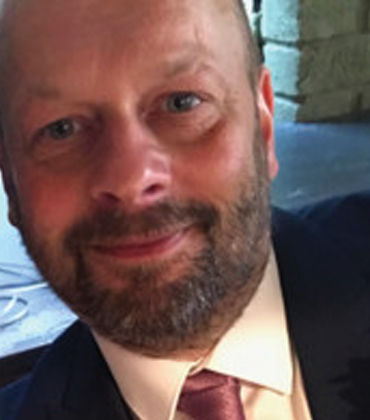
Mark Hornby, Medical Engineering Manager, Northern Care Alliance NHS Foundation Trust
Cancer Care
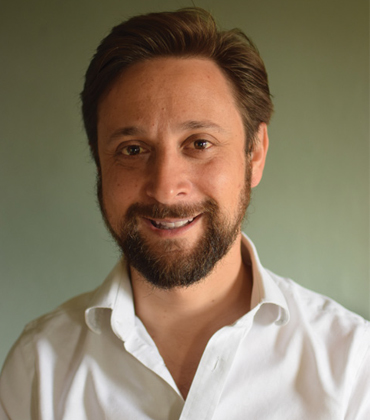
Ryan Kerstein, Associate Medical Director for Innovation and Research, Buckinghamshire Healthcare NHS Trust
Cardiovascular Devices
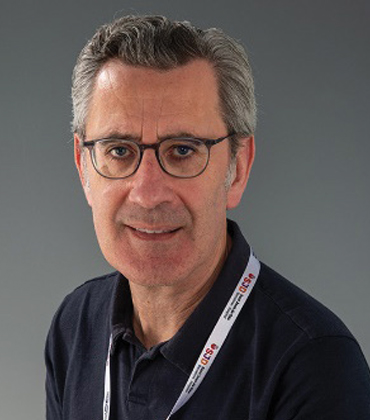
Joan Vinyets Rejón, PhD., Head of Patient Experience, The Hospital Sant de Déu
Surgical Devices and Instruments
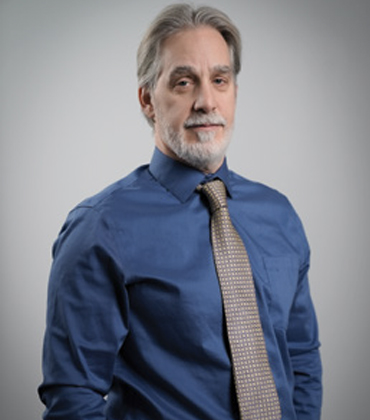
Christopher Joseph, Director of Physical Therapy, Kennedy Krieger Institute
Orthopedic

Lars Blond, Senior Orthopedic Surgeon, Aleris Hospitals
Imaging
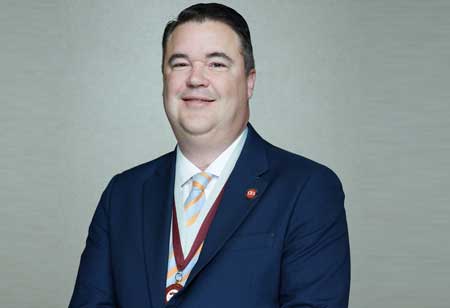
Mario Pistilli, Executive Director, Imaging Services, Children's Hospital Los Angeles

Endoscopy
Kaisla Lahdensuo, Business Director, Specialist Care, Meliva Sweden, Mehiläinen
European rehabilitation providers leverage advanced electrotherapy, robotics, and data integration to drive recovery outcomes, operational efficiency, and sustainable market expansion.
Advancing Rehabilitation Through Measurable Innovation
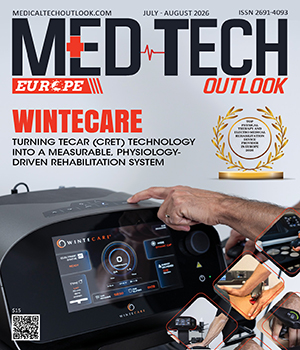
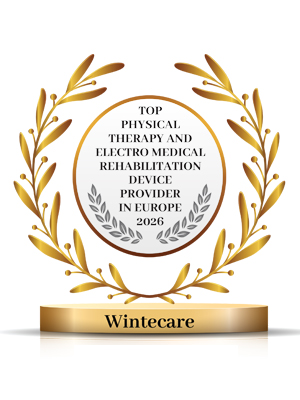
Our cover story, WINTECARE, recognized as the Top Physical Therapy and Electro Medical Rehabilitation Device Provider in Europe 2026, is redefining energy-based rehabilitation through its T~Advanced platform. By bringing real-time measurement, physiological monitoring and dosimetric control to TECAR therapy, the company enables therapists to quantify treatment delivery while preserving the clinical judgement and manual expertise that remain central to rehabilitation. Its evidence-led approach is helping clinicians manage complex recovery pathways with greater precision, consistency and confidence across sports medicine, physiotherapy and post-operative care.
This issue also features perspectives from healthcare leaders whose work highlights the broader transformation of rehabilitation services. Christopher Joseph, Director of Physical Therapy at Kennedy Krieger Institute, emphasises the importance of building community partnerships that extend rehabilitation beyond the clinical setting, creating greater opportunities for participation and long-term functional development for children with disabilities.
Mark Hornby, Medical Engineering Manager at Northern Care Alliance NHS Foundation Trust, examines the critical role of preventative maintenance, workforce development and skilled engineering in ensuring the safe, reliable and effective use of medical technology across modern healthcare systems.
The organisations and leaders recognised in this edition demonstrate that meaningful progress in rehabilitation depends on combining clinical expertise with technologies that support better decision-making and measurable outcomes. We invite our readers to explore their perspectives and discover how innovation continues to transform rehabilitation across Europe.