Medical Tech Outlook Weekly Brief
Be first to read the latest tech news, Industry Leader's Insights, and CIO interviews of medium and large enterprises exclusively from Medical Tech Outlook
What clinical cases show the potential range of regenerative orthopaedic care? A 24-year-old football player walks into a clinic in Austria with a kissing lesion in his knee, cartilage damage on both sides of the joint and a failed surgery behind him. He can no longer play and believes his career is over. When all hope was lost, he was offered an alternative: stem cell therapy. Nearly three years later, he is back on the field, playing in the Austrian second league without pain. At the other end of the clinical spectrum was an elderly man who had already survived three heart attacks. Joint replacement was too risky. Surgery was no longer a practical answer, yet pain was still shaping his life. He received stem cell therapy combined with plasma and magnetic-field treatments. The response was not immediate. But after five sessions and six months, he was pain-free. He no longer needed a knee prosthesis. For Dr. Thiago Tomazi, orthopaedic and trauma specialist, and CEO of Ortho Ried in Ried im Innkreis, Austria, these cases are not outliers. They are part of a broader clinical pattern. Across about 200 cases reviewed at Ortho Ried, pain scores and WOMAC-style functional assessments showed consistent improvement in movement and pain reduction. That said, Dr. Tomazi is careful to note that not every patient became completely pain-free, and not every case ruled out the possibility of surgery later. Making that distinction is important because Ortho Ried’s regenerative therapies are not positioned as a replacement for every surgical decision, but as a way to give selected patients more function, less pain and more time before invasive intervention becomes necessary. Where the Gap Lives A patient with chronic knee or shoulder pain is often presented with two paths. Manage it with injections and painkillers. Or replace the joint. Tomazi argues that between those two endpoints, a wide clinical territory remains underserved. “Often, people are told by somebody who can do just one thing that there is only one way to a solution,” says Tomazi. “I believe everybody also has the right to know what the possibilities of treatment are.” His own formation gave him an unusually wide view of those possibilities. He began his medical education in Brazil, then studied in Verona and Bologna, moved to Leiden in the Netherlands, trained in Bolzano, Vienna and Switzerland before settling in Austria. He sources techniques and technology from providers across South Korea, the US, Turkey, Israel and Europe. “Movement is life for me,” says Tomazi. Everything in his clinical model flows from that premise. Ortho Ried combines conservative orthopaedic care, biologic treatment protocols and surgical expertise. Reading the Patient, Not Running a Protocol Why does patient stratification matter before selecting a regenerative orthopaedic protocol? Regenerative orthopaedic care works best when the patient is evaluated as a system, not as an isolated joint. Ortho Ried starts with stratification. Structural damage, symptom pattern, tissue quality, range of motion, fluid accumulation, prior treatments, comorbidities, nutrition and medication history all feed into how Tomazi designs a treatment plan. Diagnosis begins with an X-ray and often proceeds to an MRI. Imaging determines whether a patient is a candidate for stromal vascular fraction (SVF) derived from fat tissue, bone marrow or a combination. It also reveals subchondral bone problems, bone edema and tendon and ligament pathology, requiring thinking beyond cartilage alone. Tomazi treats bone and cartilage as one osteochondral unit. That changes treatment selection. A lean, athletic patient with little usable fat may need bone marrow harvesting. A patient with bone involvement beneath the cartilage may require bone marrow-targeted intervention. Many receive combined protocols when tissue profile supports it. Diagnostics extend further still. Lab panels go beyond standard blood work to include vitamin D, minerals, amino acids and analysis of blood, urine and faeces. For patients with systemic or rheumatic conditions, Ortho Ried evaluates gut flora and screens for intestinal permeability. Tomazi draws on the intestine-joint axis theory. When gut bacteria are not functioning properly, gaps can form in the intestinal wall, allowing bacteria and toxins into the bloodstream. That triggers systemic inflammation, which can in turn drive joint inflammation. Screening for leaky gut becomes part of treatment planning for these patients. What Happens in the Room In what way does the procedure combine harvesting, injection and supportive therapies? Treatment takes one to two hours. Everything is done under local anaesthesia; no general anaesthesia, spinal infiltration or hospital bed. Tomazi uses minimally invasive instruments and very small needles. Most patients barely notice the bone marrow extraction as it happens. Most stand up, walk out and go home without crutches. Many need no pain medication at all. Tomazi works alongside nurse practitioner Mag. Tanja Jakob-Tomazi, who helped develop the technique and is present during every procedure. They travel together as a team, which allows the same workflow and patient experience to be maintained across locations. The procedure varies by case but may combine fat-derived stem cell preparations, bone marrow-derived cells, platelet-rich plasma (PRP), autologous conditioned plasma (ACP), cross-linked hyaluronic acid gels and exosomes for patients who need a stronger therapeutic response. “I take as many cells as I can,” says Tomazi. “I think more is better in this case.” Behind that sits a technical challenge he has studied closely. Mechanical separation of harvested stem cells yields roughly 18 to 30 per cent of living cells, a figure he and colleagues confirmed using a cell counter. Enzymatic separation, permitted in Germany under certain conditions but not in Austria, yields up to 90 per cent. Four major partners supply technology and technique selection is matched to case, jurisdiction and clinical need. Harvesting and injection are only one layer. Tomazi argues that most providers stop at transplantation. Growth factors, delivered via PRP or ACP, are administered in staged intervals after the procedure to support cells already in the joint. Micronutrient support such as chondroitin sulfate, MSM and glucosamine sulfate is standardised. Magnetic field therapy targets cellular function at the mitochondrial level. Intravenous protocols using NAD+, vitamins and amino acids address systemic recovery capacity. Physiotherapy or exo-robotic assistance enters the plan when rehabilitation warrants it.
Hemedis is a part of the Hegewald Group and specializes in the development and professional production of compounders for diverse mixed infusions and parenteral nutrition to manufacturing centers, hospitals and pharmacies. It primarily focuses on transferring and mixing fluids from pharmaceutical source containers into bags, syringes, elastomeric pumps, vials and cassettes.
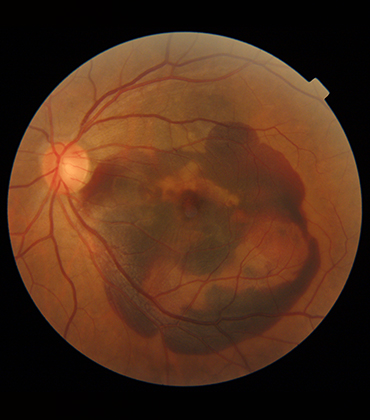
Advancements in ophthalmic diagnostics technologies are opening new possibilities for smarter workflows and consistent, high-quality imaging. Topcon Healthcare is spearheading this movement with the highest quality solutions designed with Japanese innovation. A global provider of optical coherence tomography (OCT) and fundus imaging technology, the company is leading the industry with its flagship devices, including the Maestro2, DRI OCT Triton and NW500. Its products empower clinicians to detect, assess and manage eye diseases with high-quality data, quickly. By integrating automated intelligence with clinical reliability, Topcon Healthcare enhances the efficacy and accessibility of eye care. Each system reflects its commitment to simplifying the demands of modern eye care, from automated multimodal imaging and data consolidation to workflow integration and clinical decision-making. For instance, many clinics face mounting pressure to deliver consistent, high-quality diagnostic results while handling patient load, fragmented systems and rising administrative demands. At the same time, there is an increasing need to ensure data security, meet interoperability standards and uphold clinical accuracy without sacrificing time. Topcon Healthcare addresses these challenges by developing systems and software that function as part of an interconnected, intelligent workflow rather than isolated devices that require constant workarounds. This approach is reflected in Maestro2, a multimodal imaging system that captures fundus photography simultaneously with OCT or OCT angiography within a single, automated scan. It streamlines image acquisition and removes the need for multiple instruments or manual inputs. With this system, eye care professionals can access a detailed assessment of ocular health in less time, and staff can confidently delegate imaging responsibilities, given the system’s built-in repeatability and precision.
Orthopedic
Christopher Kipps, Clinical Director of Research & Development, University Hospital Southampton NHS Foundation Trust
Mobility Devices and Aids
Dr. Vratislava Kovarova, MD, MBA, Senior Director Pupulation Health and Medicine, Fresenius Medical Care
MedTech
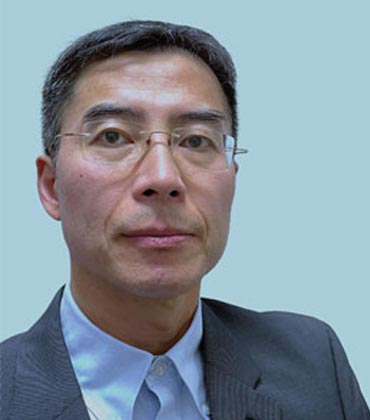
Eric Huang, Engineering Manager, Alcon
Cardiovascular Devices
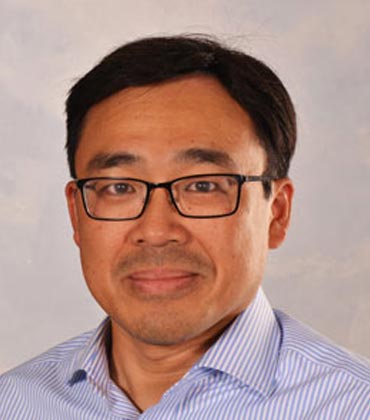
Antoni Chan, Clinical Lead in Rheumatology, Royal Berkshire NHS Foundation Trust
Endoscopy
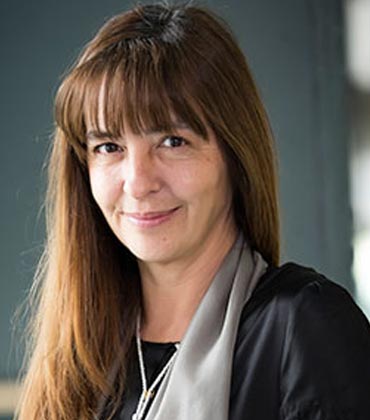
Cristina Mesquita, Director of Clinical Operations Design and Control, Luz Saude
Bioelectronics Device
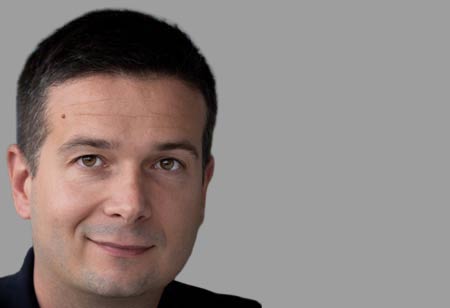
Hrvoje Tomic, Marketing Manager Servier Adriatic, Servier

Ophthalmic
Vincent Walgrave, MD, Ophthalmologist, UZ Leuven
Europe is advancing musculoskeletal care through regenerative orthopaedic innovations that restore tissue function, improve mobility and support long-term patient outcomes.
European rehabilitation device providers are adapting strategies around integration, efficiency, and value-driven healthcare procurement trends.
Advancing Healthcare through Regenerative Innovation
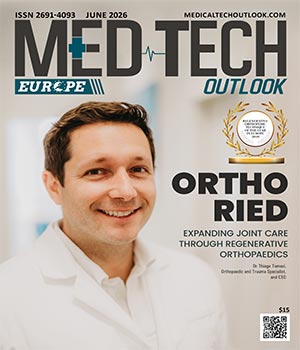
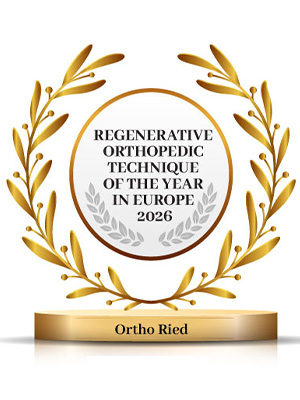
Our cover story, Ortho Ried, recognised as the Regenerative Orthopedic Technique of the Year in Europe 2026, exemplifies a trend in orthopedic medicine in which treatments focus on regenerative solutions rather than replacement methods. Under the leadership of Dr Thiago Tomazi, the Austria-based practice has developed a regenerative orthopaedic model that combines stem cell therapies, biologic treatment protocols and minimally invasive procedures to help patients reduce pain, restore mobility and delay joint replacement surgery. Its framework evaluates structural damage, tissue quality, systemic inflammation and rehabilitation needs as part of a broader clinical strategy designed around preserving native joint function for as long as possible.
This edition also explores the strategic and operational dimensions shaping modern healthcare markets. Hrvoje Tomic, Group Product Manager Croatia & Slovenia at Servier, outlines the realities behind launching therapies in cardiology, pulmonology and OTC markets, emphasising that commercial success depends on rigorous planning, market intelligence, stakeholder engagement and omnichannel execution long before a product reaches physicians or patients.
From a clinical perspective, Vincent Walgrave, MD, Ophthalmologist at UZ Leuven, examines the balance between innovation and accountability in ophthalmology. This view emphasises a crucial principle in the industry: innovative products can have real value only through appropriate patient selection and robust clinical results.
The leaders featured in this edition reflect a broader reality shaping European healthcare today. Progress cannot be achieved through innovation alone; it must involve the responsible implementation of innovations that scale successfully and improve healthcare practice and patients’ quality of life.
We invite you to explore the evolving healthcare landscape through the perspectives of industry leaders.