Medical Tech Outlook Weekly Brief
Be first to read the latest tech news, Industry Leader's Insights, and CIO interviews of medium and large enterprises exclusively from Medical Tech Outlook
For many years, manual therapy techniques have been the cornerstone of treatments for musculoskeletal issues, ranging from joint pain to scar tissue rehabilitation. However, the challenge of reaching deeper tissue layers that cannot be addressed by hands-on methods has always remained. It was this gap in therapeutic outcomes that Stefan Deny, a medical practitioner, inventor, and creator of the innovative Pneumatic Pulsation Therapy (PPT), noticed early in his career. Deny’s clinical observations revealed that traditional manual techniques often fell short of penetrating the deeper layers of tissue that are crucial for long-term healing and pain relief. He recognized that solving this problem required not just better tools, but an entirely new approach. Through years of research and experimentation, Deny discovered that applying a precise frequency of around 200 pulsations per minute could stretch tissue vertically from the inside out. This breakthrough made it possible to reach depths previously unattainable, while remaining both effective and reproducible for regular use. In 1993, Deny’s work led to the founding of Pneumed GmbH by his daughter, Barbara Deny-Jahnke, as a family-owned company rooted in his clinical experience and vision. Based in Idar-Oberstein, Germany, Pneumed has built a legacy centered on combining clinical research with precision engineering to create solutions that reshape the therapeutic landscape. Today, Pneumed’s flagship product, the pneumatron® 200, is a unique medical massage device built around a mechanically precise pneumatic pulsation that stretches tissue vertically from the inside out, reaching depths manual techniques cannot, while remaining simple and repeatable in daily use. Proven effective across numerous therapeutic applications, it has become a cornerstone in physiotherapy, occupational and hand therapy rehabilitation, sports medicine, medical cosmetics, and wellness settings.
For people living with lipedema or lymphedema, treatment failure rarely comes from a lack of options. It comes from the fact that most therapies are impossible to maintain in real life. Clinic-based schedules, appointment availability and fragmented care pathways often make continuity difficult, even when effective treatment exists. Venen Engel was designed around one insight: compression therapy only works if people can actually stick with it. Rather than organising compression therapy around clinic visits, it structured its model around everyday use through its full-length compression pants and programmable pneumatic system. That design makes therapy easier to repeat, emotionally sustainable and accessible within daily life. The result is not a device people schedule, but a system they rely on, one that turns clinically proven compression into a daily habit rather than an occasional intervention. “There is something powerful about knowing relief is always close by when your legs start to feel heavy,” says Helge Meyer, managing director. “Patients often refer to our system as their ‘best friend,’ which reflects what happens when therapy stops being something people have to arrange and becomes something they can rely on.” Treating the Whole Pathway, Not Isolated Segments Traditional compression systems often focus on the lower leg, stopping at the calf or knee. Venen Engel takes a different anatomical approach. Its full-length compression pants begin at the feet and extend past the hips and over the lower abdomen, because effective lymphatic drainage does not stop at the knee, and neither should compression therapy..


When mBrainTrain was founded, it wasn’t by chance—it was born out of necessity. The company specializes in portable EEG systems, transforming the way researchers collect and analyze brain activity data. Its founders, researchers themselves, were frustrated by the lack of truly portable, user-friendly EEG technology. Instead of waiting for someone else to develop what they needed, they took matters into their own hands. That decision led to the creation of a company that is now redefining how EEG research is conducted worldwide. From the very beginning, mBrainTrain has been driven by a simple yet powerful idea: EEG technology should be accessible, intuitive, and effective. The company understands that neuroscience is shaping the future—from brain-computer interfaces to mental state monitoring—and is determined to provide the tools that make those breakthroughs possible. Breaking Down Barriers in EEG Research For years, EEG systems have been complicated, time consuming, and difficult to use. Researchers had to undergo extensive training, sift through thick manuals, and spend hours setting up bulky, wired systems before they could even begin their actual work. “We recognized that these obstacles were holding back innovation,” says Ivan Gligorijevic, CEO of mBrainTrain. “We offer a portable EEG system that works as effortlessly as turning on a light switch.” With an emphasis on user experience, mBrainTrain’s technology eliminates unnecessary complexity. Researchers can now set up and record data in minutes, not hours—without compromising quality. Of course, simplicity doesn’t mean sacrificing performance. mBrainTrain’s portable EEG systems are designed to provide top-tier signal quality, minimal latency, and seamless time synchronization— without the need for cumbersome cables or complex configurations. While some competitors treat high performance as an added bonus, for mBrainTrain, it’s the foundation of their entire approach. The company’s philosophy is similar to that of a luxury car brand: a company like Ferrari doesn’t need to advertise its speed—it’s a given. Likewise, mBrainTrain doesn’t have to convince users of its signal quality; it’s something they naturally deliver. That’s because they build their technology with precision from the ground up, ensuring that key factors—such as latency and synchronization—are addressed at the earliest stages of development. This proactive approach has allowed them to create portable EEG systems that match or even exceed the performance of traditional wired setups.
Cardiovascular Devices

Gil Figueiredo, Corporate Matron, James Paget University Hospitals NHS Foundation
Endoscopy

Cristina Mesquita, Director of Clinical Operations Design and Control, Luz Saúde
Endoscopy

Puteri Abdul Haris, Consultant in Clinical Oncology, Oxford University Hospitals NHS Foundation Trus
Physiotherapy and Pain Management

Clare Nash, Head of Clinical Procurement, Sandwell & West Birmingham NHS Trust
Physiotherapy and Pain Management

Vratislava Kovarova, Senior Director Population Health and Medicine, Fresenius Medical Care

Cancer Care
Ryan Kerstein, Associate Medical Director for Innovation and Research, Buckinghamshire Healthcare NHS Trust
Ophthalmic
Vincent Walgrave, MD, Ophthalmologist, UZ Leuven
Advanced pneumatic pulsation devices enhance circulation, support lymphatic drainage, improve quality of life, and strengthen home-based vascular care across Europe.
Advanced compression systems, smart garments, and home devices are improving symptom control, mobility, and long-term outcomes for European patients.
Operationalizing Precision in Modern Healthcare
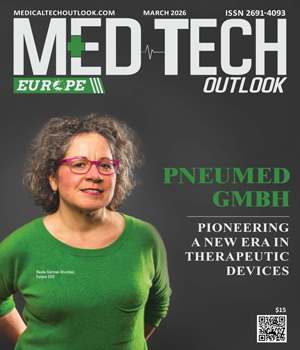
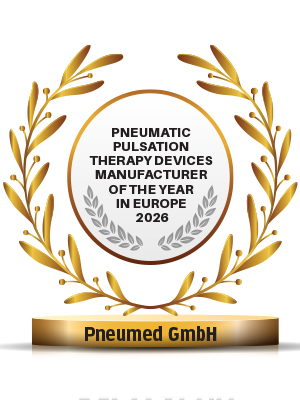
Our COY features Pneumed GmbH, recognized as Pneumatic Pulsation Therapy Devices Manufacturer of the Year in Europe 2026. Built on the clinical insights of its founder, Pneumed’s flagship pneumatron® 200 delivers mechanically precise pneumatic pulsations that penetrate tissue up to 8 cm deep, addressing therapeutic gaps that manual techniques cannot reach. Classified as a Class IIa medical device under the European MDR, the system combines regulatory rigor with practical versatility across physiotherapy, rehabilitation, sports medicine, and home care settings.
Also recognized in this issue, Venen Engel, awarded Lipedema and Lymphedema Therapy Products Company of the Year in Europe 2026, has restructured compression therapy around daily adherence rather than clinic dependency. Its full-length compression pants extend beyond traditional lower-leg systems to support continuous lymphatic drainage from the feet to the lower abdomen. Overlapping chamber technology eliminates compression gaps, while configurable adjustment zones address anatomical variability. Designed for sustained use and supported by structured patient education, the system turns clinically validated compression into a manageable daily routine.
Leadership insights further ground this issue in operational realities. Puteri Abdul Haris, Consultant in Clinical Oncology at Oxford University Hospitals NHS Foundation Trust, outlines how AI and precision radiotherapy are improving efficiency and personalization while requiring disciplined evaluation and quality control. Gil Figueiredo, Corporate Matron at James Paget University Hospitals NHS Foundation Trust, underscores that compassionate leadership and psychological safety are essential to sustaining performance in pressured healthcare environments.
Together, these perspectives reinforce a central theme, that durable innovation in medical technology depends on clinical precision, regulatory discipline, and human-centered execution. We invite you to explore how these leaders are redefining therapeutic care across Europe.