Medical Tech Outlook Weekly Brief
Be first to read the latest tech news, Industry Leader's Insights, and CIO interviews of medium and large enterprises exclusively from Medical Tech Outlook
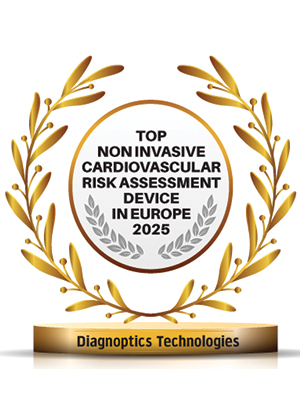
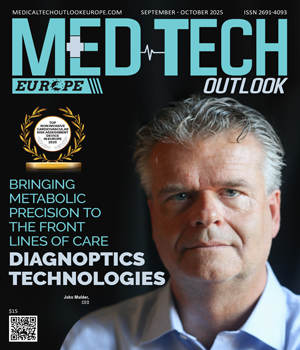
Diagnoptics Technologies is elevating clinical risk assessment by measuring advanced glycation end-products (AGEs). These compounds form when sugars react with proteins and lipids, gradually accumulating in vital areas such as the heart, arteries, brain and skin. Over time, this buildup contributes to tissue damage and increases the risk of chronic conditions, including cardiovascular disease, diabetes and neurodegenerative disorders. Studies show that everyone accumulates AGEs over time, starting at birth and continuing throughout life. Despite this, much of the clinical community remains unaware of AGEs or has a limited understanding of their role in chronic disease development and progression. Part of the issue lies in the traditional diagnostic focus on short-term biomarkers like glucose and lipid levels, which fluctuate daily and fail to reflect long-term metabolic stress. One distinguishing feature of AGEs is their natural fluorescence. When exposed to a small amount of UV light, AGEs that have accumulated and cross-linked in tissue emit a faint fluorescent signal. Diagnoptics has transformed this biological trait into an advantage, helping clinicians detect underlying risks that may go unnoticed. Its breakthrough device, the AGE Reader, enables fast, non-invasive detection of AGE levels in human tissue, delivering results in about 30 seconds without requiring blood samples or biopsies. “Our solution provides a simple and effective way to assess metabolic health,” says John Mulder, CEO. While the fluorescent signal is invisible to the naked eye, the AGE Reader uses highly sensitive sensors to detect and measure it with precision. The stronger the signal, the higher the concentration of AGEs in the tissue. This capability makes it possible to visualize relationships with other biomarkers and conditions, offering medical professionals the critical advantage of early detection of metabolic stress before it progresses to disease. AGE Reader augments standard diagnostics by highlighting unseen risks through a clear comparison of AGE levels to age-based averages. The device’s credibility rests on a firm scientific foundation. With more than 6,000 units sold globally, Diagnoptics has established a presence across both conventional and complementary medicine.
Every year, millions of people face the ordeal of painful implant complications—22 percent develop peri-implantitis, and 43 percent show symptoms of peri-implant mucositis, according to a large-scale study review by Derks and Tomasi. Behind those statistics are real lives disrupted by discomfort, costly treatments, and the emotional toll of failed restorations. For too long, the profession treated these outcomes as inevitable. But in Zurich, one company refused to accept that status quo—and set out to change the story. Reframing the Peri-implantitis Problem Peri-implantitis, once viewed as a complication caused by poor dental hygiene or patient non-compliance, has now been recognized as a structural flaw in traditional implant design. Most dental implants rely solely on osseointegration—a mechanical bond with bone—while ignoring the soft tissue interface. This oversight creates a biological gap vulnerable to plaque infiltration. Plaque and bacteria can migrate downward along the implant surface, penetrate the surrounding mucosa, and eventually reach the bone, leading to inflammation, progressive bone loss, and, in many cases, implant failure. Clinical interventions often come too late or fail to produce predictable outcomes. According to the European Federation of Periodontology, treating periimplantitis involves complex, often surgical procedures that carry significant morbidity. Outcomes vary widely, and implant loss remains common. Despite advances in treatment protocols, no universally reliable method exists for reversing peri-implantitis once it starts. Patent approached the problem differently. Rather than designing treatments for late-stage failure, the company reengineered the relationship between the implant and soft tissue. This approach led to the development of an implant surface that bonds directly with the surrounding mucosa— effectively closing off the pathway bacteria use to initiate disease. A Soft-Tissue Bond Backed by Evidence The defining feature of the Patent™ Implant is its ability to create a durable soft-tissue bond at the transmucosal level. Histological studies have confirmed that soft tissue actively grows onto the implant surface, forming a coronal seal that functions as a dynamic defense barrier. This bond prevents bacterial migration and protects the underlying soft and hard tissue from exposure to pathogenic biofilm, plaque, and bacteria..


Hydrocephalus is one of the most common diseases encountered by neurosurgery clinics. It is caused when more than normal cerebrospinal fluid (CSF) volumes accumulate in the ventricle pool of the brain, causing life-threatening pressure to neural tissue. Accompanied by complications like severe headaches, visual disturbances, epileptic seizures and paralysis, the disorder’s global impact drives the need for timely and effective treatment. Desu Medical is heeding this call with its portfolio of controlled antibiotic-releasing ventriculoperitoneal shunt systems. It has been developing these life saving devices for 17 years and is the second company in the world to produce controlled antibiotic-releasing shunts in the neurosurgery and orthopaedics field. Equally important to Desu’s highly efficient antibiotic catheter is its antibiotic valve body, which is well-known for reducing potential hydrocephalus complications and elevate treatment quality. Desu also produces pure collagen-based self-adhesive brain membranes that eliminate the need for sutures during surgery. “Our ventriculoperitoneal shunt systems are life-saving devices that effectively treat hydrocephalus patients worldwide and prevent post-op complications to connect them back to life,” says Dr. Mehmet Sorar, founder and CEO of Desu Medical.
Cardiovascular Devices

Greg Mtunz, General Manager Diagnostic Services, Buckinghamshire Healthcare NHS Trust
Endoscopy

Vratislava Kovarova, Senior Director Population Health and Medicine, Fresenius Medical Care
Cardiovascular Devices

Emma Spellman, Chief Operating Officer, the London Clinic
Cardio Vascular Devices

Gisella Murguia Norlander, General Dentist, Folktandvården Stockholm AB
Cardiovascular Devices

Antoni Chan, Clinical Lead in Rheumatology, Royal Berkshire NHS Foundation Trust

Cardiovascular Devices
Kolitha Basnayake, Deputy Medical Director, University Hospitals Birmingham NHS Foundation Trust
Cardiovascular Devices
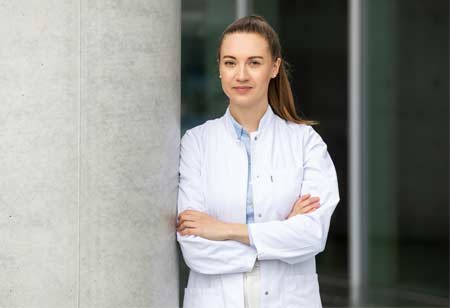
Sophia Neisinger, Dermatology/Allergology, Charite
The dental implants manufacturing industry is evolving through innovation, customization, and sustainability, addressing regulatory challenges while leveraging digital technologies to enhance patient outcomes and operational efficiency.
Advancing Patient Care Across Specialities
Dental implants now combine advanced biomaterials and digital workflows to restore oral health. Non-invasive cardiovascular risk assessment devices enable earlier detection and monitoring of heart health, reducing the likelihood of complications that might affect multiple organs, including the brain. Neurosurgery products, supported by next-generation guidance systems, ensure that when intervention is required, procedures are performed with unprecedented accuracy and reduced patient risk.
Taken together, these technologies represent a continuum of care that spans prevention and monitoring, restoration and high-stakes intervention. They highlight how European innovation is advancing in an interconnected way, weaving a fabric of solutions that collectively raise the standard of patient care across specialities.
This edition of MedTech Outlook Europe explores these cross-disciplinary breakthroughs, spotlighting leaders and innovators who are shaping the future of healthcare.
Featured thought leaders include Vratislava Kovarova, senior director of population health and medicine at Fresenius Medical Care. She highlights how the healthcare industry is evolving through sustainability, regulatory compliance and emerging technologies like telemedicine, AI, wearables and xenotransplantation to improve patient care and long-term resilience.
Emma Spellman, chief operating officer at The London Clinic, emphasises the importance of adapting to rapid advancements in oncology through patient-centred care, innovation, collaboration and leadership to continuously improve treatment and outcomes.
This edition also features Diagnoptics Technologies, a leading innovator in non-invasive advanced glycation end-products (AGE) measurement. It AGE Reader solution empowers clinicians to detect hidden metabolic risks and advance preventive care.
We hope this edition gives you fresh perspectives and practical insights that help you strengthen collaboration and play a part in advancing patient care across Europe and beyond.