Medical Tech Outlook Weekly Brief
Be first to read the latest tech news, Industry Leader's Insights, and CIO interviews of medium and large enterprises exclusively from Medical Tech Outlook
The demand for cystoscopy services is rising as more number of patients require investigation and surveillance for urological conditions. Despite this growing need, healthcare providers face significant capacity constraints. While many cystoscopy procedures have made the shift from being performed in operating theatres to outpatient clinics, there is an opportunity to go one step further. What if we could move cystoscopy procedures out of outpatient clinics in acute hospitals and into Community Diagnostic Centres? By shifting care closer to the patient, we could free up valuable capacity, streamline clinical pathways, increase the number of procedures performed, and improve access to timely diagnosis while making more efficient use of healthcare resources. Ambu , a Danish medical technology company and pioneer in single-use endoscopy, believes the transition to more accessible, community-based cystoscopy requires more than introducing another cystoscope. The company positions itself as a partner to healthcare providers, helping hospitals redesign diagnostic pathways, streamline clinical workflows, and move routine cystoscopy services into Community Diagnostic Centres (CDCs). Its lightweight, portable single-use platform delivers high-quality imaging without the infrastructure associated with traditional reprocessing of endoscopes, enabling providers to expand diagnostic capacity while improving operational efficiency and sustainability.
When mBrainTrain was founded, it wasn’t by chance—it was born out of necessity. The company specializes in portable EEG systems, transforming the way researchers collect and analyze brain activity data. Its founders, researchers themselves, were frustrated by the lack of truly portable, user-friendly EEG technology. Instead of waiting for someone else to develop what they needed, they took matters into their own hands. That decision led to the creation of a company that is now redefining how EEG research is conducted worldwide. From the very beginning, mBrainTrain has been driven by a simple yet powerful idea: EEG technology should be accessible, intuitive, and effective. The company understands that neuroscience is shaping the future—from brain-computer interfaces to mental state monitoring—and is determined to provide the tools that make those breakthroughs possible. Breaking Down Barriers in EEG Research For years, EEG systems have been complicated, time consuming, and difficult to use. Researchers had to undergo extensive training, sift through thick manuals, and spend hours setting up bulky, wired systems before they could even begin their actual work. “We recognized that these obstacles were holding back innovation,” says Ivan Gligorijevic, CEO of mBrainTrain. “We offer a portable EEG system that works as effortlessly as turning on a light switch.” With an emphasis on user experience, mBrainTrain’s technology eliminates unnecessary complexity. Researchers can now set up and record data in minutes, not hours—without compromising quality. Of course, simplicity doesn’t mean sacrificing performance. mBrainTrain’s portable EEG systems are designed to provide top-tier signal quality, minimal latency, and seamless time synchronization— without the need for cumbersome cables or complex configurations. While some competitors treat high performance as an added bonus, for mBrainTrain, it’s the foundation of their entire approach. The company’s philosophy is similar to that of a luxury car brand: a company like Ferrari doesn’t need to advertise its speed—it’s a given. Likewise, mBrainTrain doesn’t have to convince users of its signal quality; it’s something they naturally deliver. That’s because they build their technology with precision from the ground up, ensuring that key factors—such as latency and synchronization—are addressed at the earliest stages of development. This proactive approach has allowed them to create portable EEG systems that match or even exceed the performance of traditional wired setups.


For people living with lipedema or lymphedema, treatment failure rarely comes from a lack of options. It comes from the fact that most therapies are impossible to maintain in real life. Clinic-based schedules, appointment availability and fragmented care pathways often make continuity difficult, even when effective treatment exists. Venen Engel was designed around one insight: compression therapy only works if people can actually stick with it. Rather than organising compression therapy around clinic visits, it structured its model around everyday use through its full-length compression pants and programmable pneumatic system. That design makes therapy easier to repeat, emotionally sustainable and accessible within daily life. The result is not a device people schedule, but a system they rely on, one that turns clinically proven compression into a daily habit rather than an occasional intervention. “There is something powerful about knowing relief is always close by when your legs start to feel heavy,” says Helge Meyer, managing director. “Patients often refer to our system as their ‘best friend,’ which reflects what happens when therapy stops being something people have to arrange and becomes something they can rely on.” Treating the Whole Pathway, Not Isolated Segments Traditional compression systems often focus on the lower leg, stopping at the calf or knee. Venen Engel takes a different anatomical approach. Its full-length compression pants begin at the feet and extend past the hips and over the lower abdomen, because effective lymphatic drainage does not stop at the knee, and neither should compression therapy.
Medical Imaging Systems

Beate Graeter, EP Lab Coordinator, Caromont Health
Spine Solutions

Vratislava Kovarova, Senior director patients’ safety and sustainability, Fresenius Medical Care – Europe Middle East & Africa
Endoscopy

Cristina Mesquita, Director of Clinical Operations Design and Control, Luz Saude
Endoscopy

Puteri Abdul Haris, Consultant in Clinical Oncology, Oxford University Hospitals NHS Foundation Trust
Physiotherapy and Pain Management
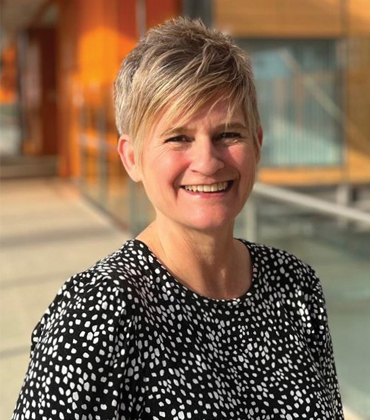
Clare Nash, Head of Clinical Procurement, Sandwell & West Birmingham NHS Trust

FemTech
Kjetil Tasken, Head and Director of Institute of Cancer Research, Oslo University Hospital

Cardiovascular Devices
Sophia Neisinger, Dermatology/Allergology, Charite
Single-use cystoscopy platforms improve infection control, procedural efficiency, patient safety, and healthcare operational flexibility significantly.
Medical device design and development has become one of the most influential segments of the healthcare industry.
Driving Better Outcomes through Innovation
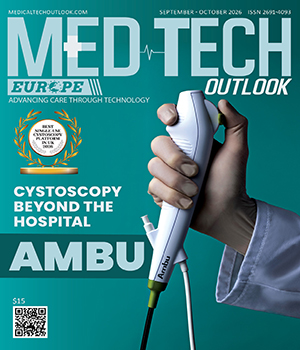
Our cover story features Ambu, recognised as the Best Single-Use Cystoscopy Platform in UK 2026. Combining its single-use platform with redesigned clinical pathways, digital connectivity and operational support, the company is enabling providers to expand diagnostic capacity, shorten waiting times and improve patient access without compromising clinical quality or sustainability. Its collaborative approach demonstrates that lasting innovation comes not only from developing advanced medical devices but also from helping healthcare providers redesign services to meet changing patient needs and performance expectations.
This edition also features perspectives from Kjetil Tasken, Head and Director of the Institute of Cancer Research at Oslo University Hospital, who examines how European collaboration is accelerating precision cancer medicine through shared clinical trials, molecular diagnostics and cross-border research, helping improve equitable access to personalised cancer treatment. Beate Graeter, EP Lab Coordinator at Caromont Health, discusses the increasing complexity of instrument reprocessing and the growing importance of workforce development, process discipline and patient safety as surgical technologies continue to evolve.
Taken together, these stories reflect a common direction across healthcare: meaningful progress comes from combining innovation with practical implementation. The organisations and leaders featured in this edition demonstrate how thoughtful execution, clinical collaboration and continuous improvement are helping shape a more efficient, accessible and sustainable future for healthcare. We invite you to explore their stories and discover the ideas influencing the next generation of medical technology across Europe.