
Medical Tech Outlook Weekly Brief
Be first to read the latest tech news, Industry Leader's Insights, and CIO interviews of medium and large enterprises exclusively from Medical Tech Outlook
A featured contribution from Leadership Perspectives: a curated forum reserved for leaders nominated by our subscribers and vetted by our MedTech Outlook Advisory Board.

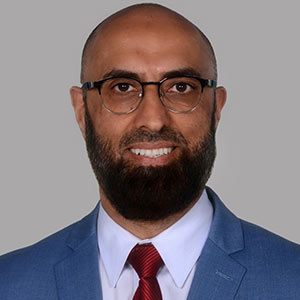
Abe Nader is an experienced healthcare executive with 20+ years of advancing clinical, operational, and technical excellence. As an expert in enterprise imaging, EMR integration, AI adoption, and workflow optimization, I drive strategy, service line growth, and high-performing teams to deliver measurable improvements in quality, efficiency, innovation, and patient satisfaction.
In an exclusive interview with MedTech Outlook, he shared invaluable insights on the hidden power of institutional knowledge in healthcare, how unspoken routines, mentorship, and shared wisdom sustain safe, compassionate care beyond what technology alone can deliver.
The Hidden Heartbeat of Healthcare
Lately, I’ve been thinking about how much of what keeps a healthcare organization running smoothly isn’t written anywhere. It lives in people, in their quiet routines, unspoken understandings, and the small, everyday gestures that make care feel seamless.
In healthcare, we talk a lot about data, analytics, and artificial intelligence. And for good reason, these tools help us uncover insights, improve outcomes, and drive efficiency. But there’s another kind of intelligence that’s just as vital, one that can’t be coded or easily measured: institutional knowledge.
Institutional knowledge is the sum of our shared experiences, the lessons learned from countless patient interactions, team huddles, and moments of on-the-fly problem-solving. It’s what allows a technologist to anticipate a radiologist’s next request, or a nurse to sense a patient’s decline before the monitor alerts. It’s what helps new initiatives succeed because someone remembers what worked and what didn’t the last time we tried.
This kind of wisdom doesn’t come from a manual or a system build. It comes from people who have watching, adjusting, and caring. And while we often celebrate innovation and technology, we sometimes forget that the most reliable part of any system is still the human being behind it.
I’ve seen this play out countless times. A project plan can look perfect on paper, but it’s the experienced technologist, the nurse who’s been there for 15 years, or the scheduler who knows the unspoken flow of the day who will spot the flaw before anyone else. Their knowledge doesn’t always come with a title or a credential but it’s the glue that holds the process together.
“In healthcare, our most reliable system is people: institutional knowledge, mentorship, and shared wisdom, the hidden heartbeat guiding safe, compassionate care beyond data, protocols, and AI.”
The challenge is that this knowledge is fragile. It’s easy to lose when people retire, transfer, or feel unheard. Every time someone walks out the door, we lose more than a name on the schedule we lose perspective, memory, and trust built over time. It’s like erasing a part of the organization’s collective story.
That’s why creating space for mentorship, dialogue, and storytelling isn’t just “nice to have” it’s essential. Mentorship doesn’t always mean formal programs; it can be as simple as a five-minute conversation at the end of a shift or inviting a new colleague to observe how you handle a difficult workflow. Dialogue creates connection. Storytelling creates continuity. These are the moments where understanding passes from one generation of caregivers to the next.
In my own work, I’ve come to see how important this continuity is. In imaging, for example, technology changes constantly, new scanners, new protocols, and new AI tools. But the heart of good practice remains the same: a shared understanding of how to care for patients safely and compassionately, and how to support one another in doing so. That knowledge isn’t stored in a PACS or an EMR. It lives in people and if we don’t nurture it, it fades.
Technology can help us store information, but only people can carry understanding. That difference matters. A system can tell you what to do; experience helps you know why and when to do it. Artificial intelligence may someday read scans or predict risk, but it will never replace the human intuition that notices the subtle change in a patient’s tone, or the team instinct that steps in before something goes wrong.
Protecting Healthcare’s Quiet Intelligence
As healthcare continues to evolve, we need to think about how to capture and protect this hidden heartbeat the knowledge that lives between the lines of policy and procedure. We need to ask ourselves: Are we creating environments where people feel safe to share what they know? Are we giving time and space for reflection, not just reaction?
It’s easy to measure efficiency, but harder to measure wisdom. And yet, it’s wisdom, a not just speed that defines quality care. The more we recognize and invest in that, the stronger our organizations become.
Institutional knowledge isn’t a relic of the past. It’s our most renewable resource, one that grows every time we listen, teaches, and cares. The future of healthcare will always depend on innovation, but it will also depend on remembering the simple truth that has carried us this far: the best systems still run on people.
The quiet routines.
The shared experience.
The heartbeat we don’t always see but feel every single day.

