
Medical Tech Outlook Weekly Brief
Be first to read the latest tech news, Industry Leader's Insights, and CIO interviews of medium and large enterprises exclusively from Medical Tech Outlook
A featured contribution from Leadership Perspectives: a curated forum reserved for leaders nominated by our subscribers and vetted by our MedTech Outlook Advisory Board.

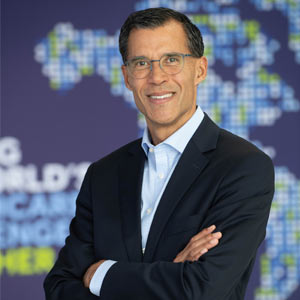
Alphons Vincent, MD is currently Medical Director for the Cardiac Rhythm Management division of Medtronic in Western Europe. He has been with Medtronic for 33 years and has held several positions in marketing, business, clinical, education and medical affairs.
My experience includes positions in Vitatron, a pacemaker company within the Medtronic corporation, followed by positions in Medtronic Cardiac Surgery (heart valves), Subcutaneous Diagnostics and Monitoring (implantable cardiac monitors) and Cardiac Rhythm Management (pacemakers, defibrillators, cardiac resynchronization therapy). I am a graduate (MD) of the Medical School at the University of Nijmegen (NL) and hold bachelor’s degrees in Management Information Systems and Business Economics at the University of Tilburg (NL).
Having a cardiologist as my father and growing up seeing pacemakers on his desk, I got in touch with medical technology in early life. It was, however, a research project during my medical study, as well as a vacation job at a research facility at Medtronic, that got me fascinated by medical technology. It was amazing to see how medical devices interact with the human physiology, correct electrical disturbances in the heart and strengthen the heart muscle. After these experiences, it became clear to me that I wanted to pursue a career in business and not in a hospital.
When I started working in 1990, the development of pacemakers involved sensor technology to provide rate changes during exercise as well as dual chamber pacemakers to obtain good coordination between atria and ventricles. Thereafter, atrial preventive pacing was developed, which showed benefit in some smaller studies but was never established. Triple chamber pacemakers that synchronize the ventricles were developed to address patients suffering from heart failure. This development was very successful and received the highest recommendations from all the guidelines.
"The mission that keeps me, as well as the other 90,000 employees in the company, motivated each day is to alleviate pain, restore health and extend life."
The biggest innovation in pacemakers, however, happened 10 years ago, when, on December 5, 2013, our first leadless pacemaker was implanted. Two other companies had introduced leadless pacemakers before us but failed due to complications with cardiac perforations and battery.
A leadless pacemaker is like a big pill, less than 1cc with a weight of less than 2 grams. It is entirely implanted within the heart, as compared to conventional pacemakers that are implanted in the chest region and connected to the heart with cables (leads).
In my function as Medical Director, I had only one priority during the introduction of our leadless pacemaker: patient safety. We developed a very extensive training program, which included simulator-based training, implantation in animals, implantation in human cadavers, as well as online and in-class training. Only physicians with the appropriate experience could enter the training program. The introduction was slow because we wanted to learn and get experience with this new technology. The training program was regularly adapted based on these learnings.
With now more than 200,000 leadless pacemakers implanted and 30,000 patients in clinical studies, we are able to prove the safety as well as the efficacy of this procedure.
Recently, artificial intelligence (AI) got a lot of attention, and because our devices register and store a lot of digital data, this provides a huge opportunity. Our first application is in implantable cardiac monitors: using a deep neural network we are able to filter out around 90% of artefacts while keeping a high sensitivity. This will save the hospital, on average, 2 hours of review time per device per year, so 200 hours for a standard clinic with 100 devices. AI is a high priority for us, and I expect to see further applications soon.
Early in my career, I read many business books, such as the Harvard Business Review and other non-fiction books. The book by Stephen Covey (The Seven Habits of Highly Effective People) especially helped me to find the right balance between work, family, friends, and hobbies, as well as how to effectively interact with people.
I love my current role because I interact with very smart and often young, ambitious people within the company, with physicians who are the leaders in their field and with European professional societies.
The mission that keeps me, as well as the other 90,000 employees in the company, motivated each day is to alleviate pain, restore health and extend life. Several consultants have told us that we are lucky to be in a business with such a mission. We are about applying our medical technology to improve the outcomes of patients.
Given the incidence of cardiovascular disease, many of us will need or have a relative who needs a medical device. My father has had a pacemaker for 10 years, and I have seen how it restored his health and extended his life. That has been the best proof for me that I chose the right job.

