
Medical Tech Outlook Weekly Brief
Be first to read the latest tech news, Industry Leader's Insights, and CIO interviews of medium and large enterprises exclusively from Medical Tech Outlook
A featured contribution from Leadership Perspectives: a curated forum reserved for leaders nominated by our subscribers and vetted by our MedTech Outlook Advisory Board.

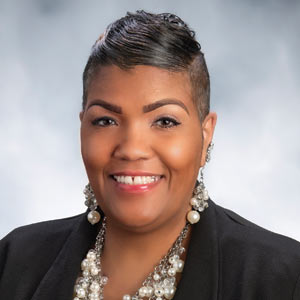
Imana Mo Minard is a seasoned healthcare professional who has navigated various dimensions of medical and healthcare services during her over 20 years in the industry. Her journey in healthcare commenced as a paramedic with the Detroit Fire Department EMS. Concurrently, she extended her knowledge and skill set by qualifying as a nurse.
After over a decade with the EMS, Minard embarked on her nursing career in the ER at Detroit Medical Center. Proving her mettle, she moved up the ranks, first serving as a supervisor, then manager, and finally as the Administrative Director, overseeing ERs at three significant hospitals and an observation unit.
Post nearly a decade with Detroit Medical Center, Minard transitioned to Beaumont Health, which later merged to form Corewell Health East. At present, Minard is at the helm of the entire East Farmington Hills location, managing a multitude of departments including the Emergency Center, Outpatient Center, medical-surgical units, hemodialysis department, IV team, PICC nurses, and the floating pool.
In a recent interview with Healthcare Business Review, Minard delves into the transformative impact of advanced technology on the healthcare industry. She highlights the advantages of innovations such as virtual immersion and Telesitter, and electronic medical records, underlining their potential to bolster patient safety, streamline processes, and address staffing challenges. Throughout her insights, Minard emphasizes the critical need to retain our human touch in this pivotal profession.
What is a significant challenge that you face in your acute care hospital, and how does it relate to the long-term care industry?
Working in an acute care hospital presents unique challenges. One significant hurdle that I face pertains to long term care - specifically, the process of placing patients into long-term care facilities. The insurance authorization process can be protracted, sometimes extending up to days, and we often find ourselves caught up in a web of strict criteria laid out by insurance companies.
Such constraints, particularly when dealing with patients who urgently need care in a long-term facility, can cause severe bottlenecks. If we fail to streamline the process of patient placement, it adversely impacts hospital throughput. This issue escalates when we have patients awaiting transfer to external facilities occupying beds within our acute care hospital. The resulting backlog affects various areas of our operation, from our emergency departments and operating rooms to our catheterization (CATH) labs.
At the same time, we must recognize that long-term care facilities are under considerable strain as well. They are grappling with staffing issues much like we are, which extend across all industries. The shortage of qualified personnel to care for their patients mirrors acute care challenges. This overarching staffing crisis is a systemic problem that we must collectively address.
What are the latest projects on which you are working in your current organization? What are some of the technologies you are using to ensure its success?
Currently, we’re piloting a system-wide virtual immersion program to address staffing shortages, particularly in medical surgical areas where new graduates are less inclined to work. They are more tend to gravitate toward specialty areas like the ER, critical care, and labor and delivery. To attract talent to these roles, we’re introducing virtual nurses who can assist with assessments, act as a resource for on-site nurses, and facilitate discharge planning. This innovative approach excites me as an advocate for integrating technology into healthcare.
" We are humans caring for other humans in a profession deeply rooted in empathy and compassion. In times of unprecedented challenges like we are experiencing now, we must strive to support our teams and adapt to new situations "
I believe in utilizing electronic medical records, equipment data integration, and communication tools like iPhones and the mobile heartbeat program to enhance patient care. I’m always eager to test upcoming tech solutions, recognizing technology as a crucial ally in the face of labor shortages across all sectors, including healthcare. Technology is key to delivering safe and effective care, and I’m committed to exploring its full potential.
What technological trends do you look forward to that will change the future of the landscape?
I genuinely love my work, especially the innovative solutions we use for more effective care. Our Telesitter program employs cameras in patient rooms to communicate with and redirect them from interfering with drains and tubes, preventing falls and enhances patient safety. I’m also excited about the virtual nurse initiative and our telehealth services, particularly for psychiatric care, which we have been piloting for about a year in our emergency department. Consequently, it has positively impacted our length of stay metrics. Seamless integrations with our electronic medical record system reduce human error and boost efficiency, like scanning a patient’s arm band to auto-populate information. These healthcare tech advancements are thrilling, streamlining processes, reducing errors, and improving care. Being part of this technological evolution is a blessing.
As an ending note, what is your advice for other senior leaders and CXOs working in the industry?
The importance of preserving our humanity in patient care cannot be overstated, especially in the face of unprecedented challenges. In healthcare, where empathy and compassion are fundamental, it’s vital to remember that we, as humans, care for other humans. Our profession has evolved significantly, with increased regulation and considerations of cost and patient criteria. However, amidst these changes, we must not lose sight of the human touch. We are human beings, serving in a human-centered profession, and it’s imperative that we continue to prioritize our shared humanity and adapt to evolving circumstances.

